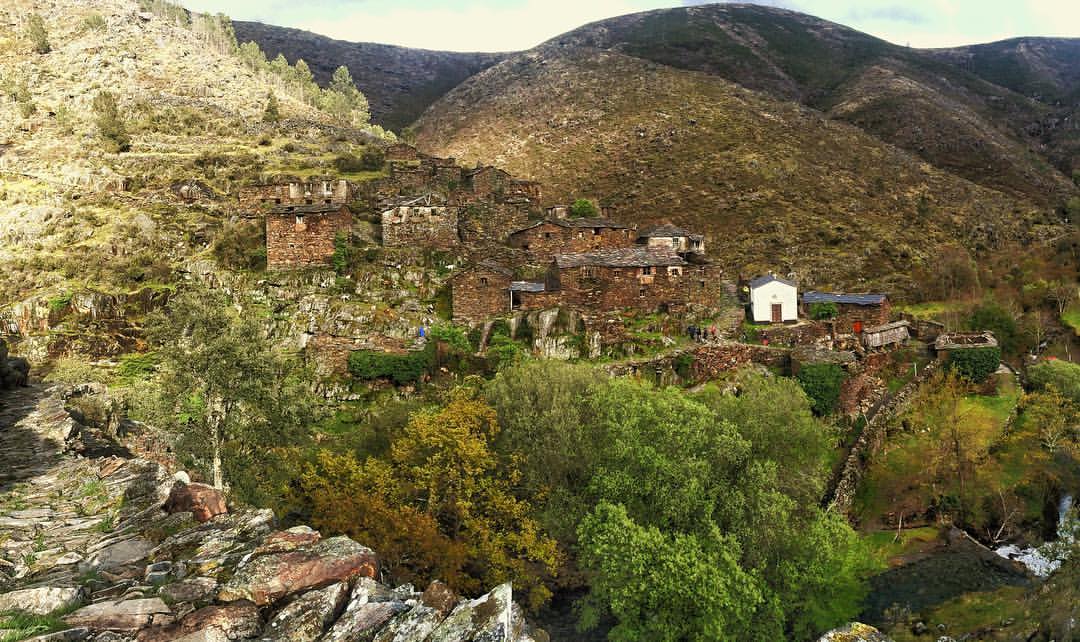
Drave Village

Drave is an uninhabited village located at 600 m of altitude, in a hollow between the Freita, São Macário and Arada mountain ranges, within the Arouca Geopark, and its first recorded mention dates back to the reign of King Dinis. It is a traditional village where the houses are made of stone, known as pedra lousinha, with schist roofs, and where three rivers meet.

The village is very isolated and shows no signs of modernity: it is not accessible by car, and the nearest village, Regoufe, is 4 kilometres away. It has no electricity, running water, sanitation, gas, postal service, or telephone, and mobile network coverage is scarce.

The Martins Family

The Martins family, recorded in Drave since 1700, was one of the largest families in the village, and also the last to leave it, in the year 2000.

They still gather annually at the Feast of Our Lady of Health, on August 15, which continues to be celebrated every year.

The CNE and the Village

In 2003, the CNE—Corpo Nacional de Escutas—opened in Drave its Base Nacional da IV (BNIV), a scout center for Rovers. The path to this point included important moments such as “Rumos da Consciência” (1992), “Rumos do Homem Novo” (1993), and “Rover 2001.” This last activity marks the beginning of the village’s reconstruction.

This center is already a global reference, belonging to the SCENES—Scout Centres of Excellence for Nature and Environment—and GOOSE networks.

It is also recognized as a center of excellence by the CNE, a distinction granted to centers that meet certain requirements in terms of infrastructure and educational programs.

Drave
Privacy Overview

This website uses cookies so that we can provide you with the best user experience possible. Cookie information is stored in your browser and performs functions such as recognising you when you return to our website and helping our team to understand which sections of the website you find most interesting and useful.