

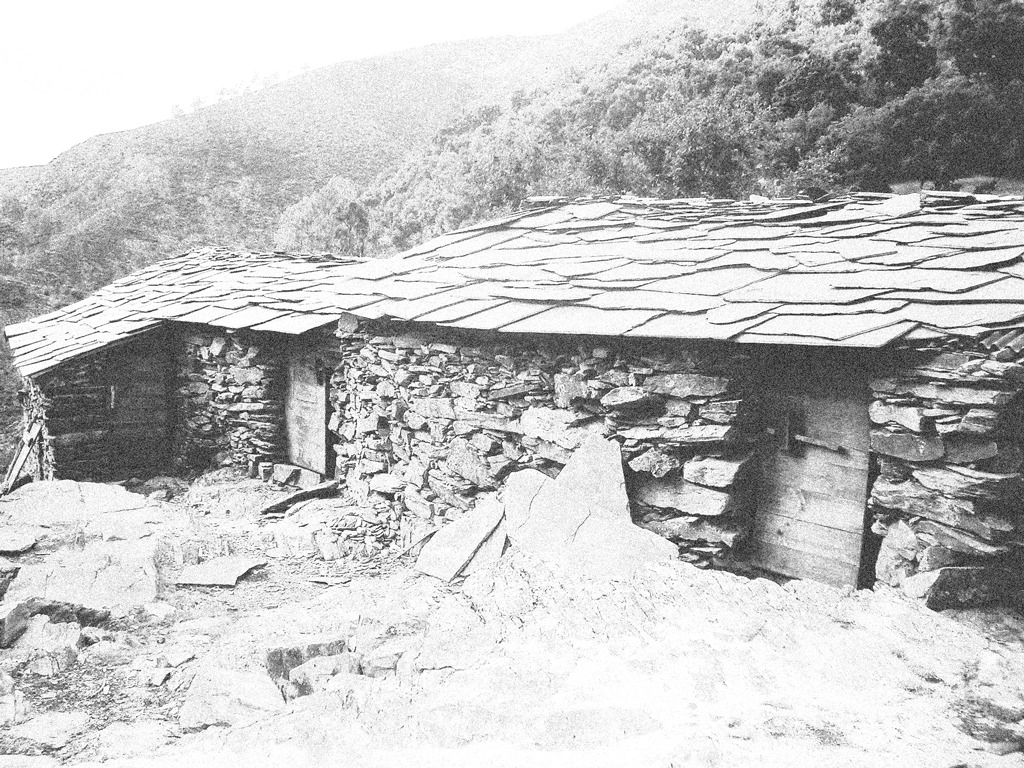
There are no definitive conclusions about the toponym Drave. However, there are several references to words close to the term Drave, such as Drava, Dravus, Dravo, Drauss, and Drab. All of these are river names; terms that emerged from associating the names of submerged plants and animals. Although the name Drave is uncommon, there are a few European rivers, all tributaries of the Danube, with that name. There are also personal names such as Dravinius and Dravius, derived from the Gaulish Dravos. But how did Drave come about?
One of the most relevant hypotheses is that this region has been habited since the earliest times. Evidence of this includes the discovery of several archaeological remains, such as cist graves and hillforts, with particular note given to a Celtic gold bracelet found near Drave, in Regoufe. What may have attracted people to places as remote as these was likely the presence of several watercourses and the fertility of the land, which allowed communities to sustain themselves. Another possible explanation for the emergence of Drave as a settlement has to do with its clear isolation. It is said that Drave developed as a refuge from criminal prosecution—that is, people who had committed certain crimes would hide there, in a place sufficiently remote and concealed. But these are nothing more than suppositions. The oldest document in which Drave is mentioned is the Inquirição dos Reguengos da Beira, from the reign of King Dinis (1279–1325).

In Drave, day-to-day life followed, with rare exceptions, the same pattern. As soon as the sun rose, the silence was broken by the creak of doors and the slow footsteps of those heading to the animal pens. It would be time to feed the livestock and then lead them up the hillside.
After that came the farm work. Working the land demanded attention and specific tasks depending on the season of the year. Fields were ploughed, manured, sown, and watered in an unbroken succession of chores; repeated over generations of Drave’s habitants, and gradually refined over time.
In the days when Drave’s last residents still lived there, carrying out so many duties was only possible with the help of Drave’s sons and daughters who lived in the surrounding area. Tasks that generations in Drave had gradually perfected.
In the days when Drave’s last residents still lived there, carrying out so many chores was only possible with the help of Drave’s sons and daughters who lived in the surrounding area.
Meals, often prepared late, were enjoyed by everyone. After eating, some time was set aside for rest.
They would use that time to talk about current events, watch the cows from the balcony, or simply lie back to recover strength for the day’s work. If anything was missing, it was necessary to go to the nearest village and ask the local grocer for help—or, in more modern times, call a taxi.
By late afternoon, when the dim light threatened to cover the mountain with its dark mantle and the livestock had not yet returned to the village, it was necessary to go up the mountain to bring them back. This was a dangerous task: although wolves did not usually attack humans, they were always a threat. Even more dangerous, however, would be an encounter with a wild boar enraged by the invasion of its territory.
From time to time, a cow would be taken to the neighbouring village of Silveiras to be bred by a bull.
Baking bread was a usual task. It was an important part of the population’s diet. It was made by hand with cornmeal, ground at the village mill, with a bit of rye flour thrown in so that the dough could bind better. The recipe relied on a sourdough starter. The flour was placed in a kneading trough, and a small hollow was made in the centre where salt—one of the most precious goods in the area—was added. Water was then gradually poured in, stirring constantly with a large wooden spatula. After mixing in the starter, the dough was kneaded until it “bound well.” Small pieces of dough were taken and set aside in another trough. After moving all the dough to the opposite side, the process was repeated, moving it back to the original side. This was repeated three times.

In Drave, people cultivated corn, beans, rye, potatoes, vegetables, vines, and fodder for animals. Most production—especially in the later period when the village was still habited—was for family self-consumption, since the isolation made it difficult to take products to market: “we can’t walk that far anymore, we’re old” said Mr Joaquim, the village’s last resident.
Rye and corn were used to make bread; the leaves and rye straw were used for feeding cattle and bedding. Beans, potatoes, vegetables, and wine were consumed at home. Milk was for the calves, and fodder for the animals.
Mixed farming was practised for household consumption. However, the crops grown on the largest scale were corn and rye. Corn cultivation had several stages: sowing began in April and was done by throwing the seeds on the field, a process called broadcasting. Then came hoeing and earthing up, which involved pulling soil up around the base of the corn while removing weeds—hard work requiring a lot of labour. Next came thinning, removing plants that prevented properly spaced growth. When the corn was nearly fully grown, the tassel was cut off and either fed green to the cows or dried for winter feed. In September, when the corn was ripe, the ears were cut and carried in ox carts to be stored in haylofts, and later husked. The husked ears were dried on the threshing floor and then stored in the granaries, from which they were only taken as needed.
The leaves were stored in haylofts for animal feed. The stalks were cut with a small sickle and carried on people’s heads to the haylofts, where they were stored for later use as bedding and feed during the harsh winter. Threshing was done by hand: the corn was spread on the threshing floor and beaten with a flail—a long stick with a wooden strip at the end called a pitolo. The corn was ground in the family mill when water flowed on the river. During summer, when the river dried up, it was necessary to grind corn in a neighbouring village. Cobs and husks were used as fuel for the hearth. Beans, which were sown alongside the corn, were harvested as they ripened.
Rye adapted well to Drave’s schist soils. It too was broadcast-sown, cut with a small sickle, tied into sheaves, dried in stacks, and hand-threshed. It was used both for mixing with corn in making broa and for sowing fodder. The straw was stored in the pens as animal feed.
In September/October, fodder was sown by broadcasting in the corn furrows. Throughout winter, most fields were occupied with fodder for animals. Vines were also very important; some even said that Drave’s calling card is its wine. Vines were trained on trellises, but some also climbed trees. Red grapevines were far more common than white, so only the so-called “American” wine was made. The grape harvest took place in late September/October. Cutting the grape bunches was difficult and dangerous because they grew in the most unlikely places—climbing trees, above the river, and so on. After being picked, the grapes were placed in the press and crushed by foot.
Some of the Martins devoted themselves to beekeeping. They had several beehives—some covered with slate lids, others with wooden shelters—set up on the hillsides, protected by rocks. Honey production was mainly intended for household consumption. When wildfires occurred, the honey production declined, since the bees were deprived of their food sources: eucalyptus blossom, gorse, and chestnut flowers.
Source: “Antropologia e Realidade Portuguesa. Drave: um passado sem futuro?” de Claúdia C. Silva, Eugénia C. Almeida, Maria Júlia Morais e Maria Madalena Soares, 1989